Get An Early Orthodontic Evaluation in Washington, DC
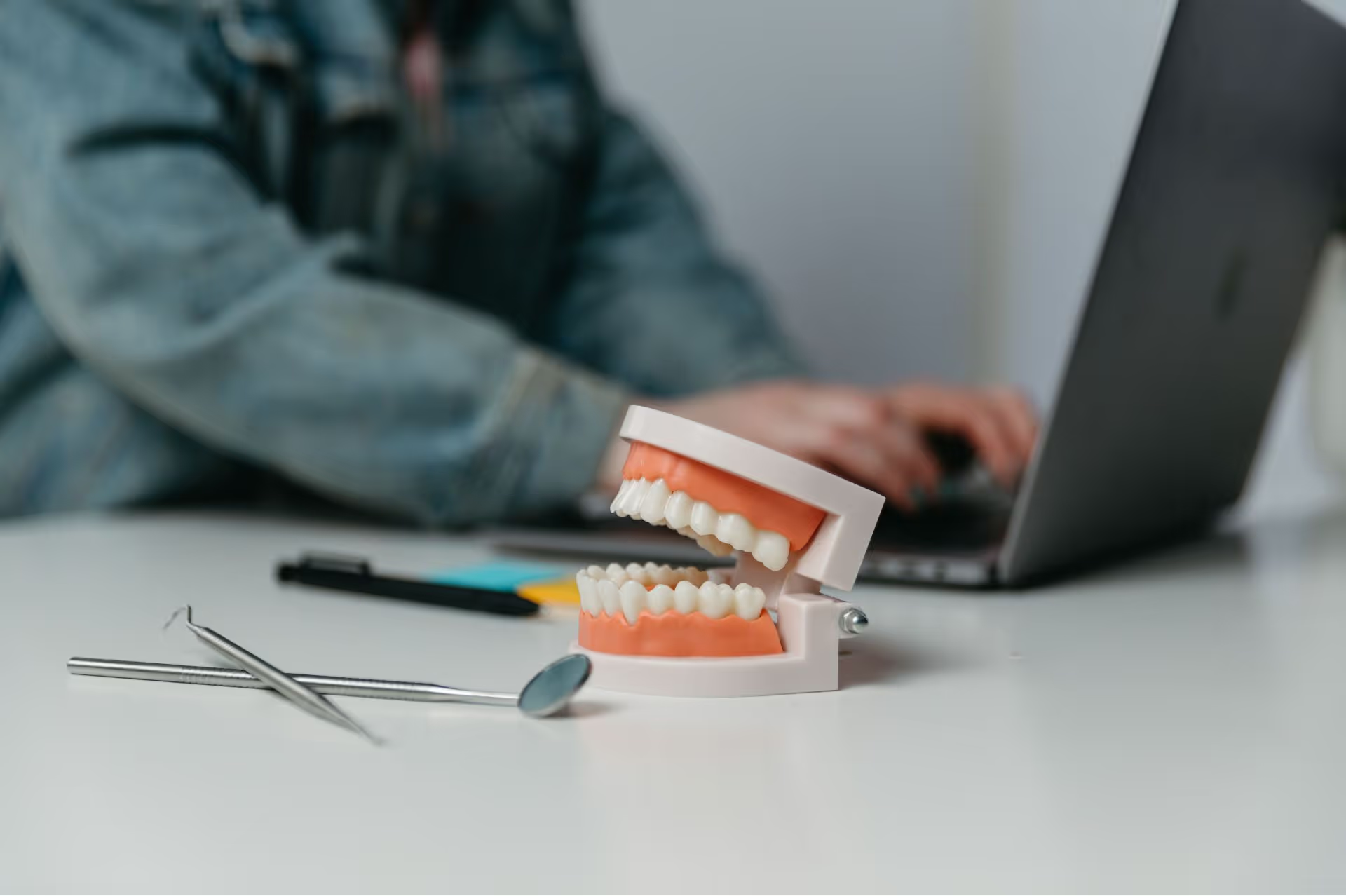
Early Orthodontic Evaluations for Children in Washington, DC
An early evaluation at Smile Horizon Orthodontics is a single appointment to get a clear picture of how your child's teeth and jaw are developing. It's not a commitment to braces, and it's not a sales visit. Most children who come in at this age leave with a monitoring plan, not a treatment plan. The goal is simply to know where things stand.
Dr. Mary Jividen is a board-certified orthodontist and Diplomat of the American Board of Orthodontics, which means families who come to our practice get to work directly with a specialist. We're located at 4900 Massachusetts Ave NW, Suite 260, convenient for families coming from Spring Valley, Tenleytown, and AU Park.
If you'd like to schedule an evaluation or just ask a few questions first, you're welcome to call: (771) 210-3484. You can also reach out online to find a time that works for your family.
Quick Takeaways
- The American Association of Orthodontists recommends a first evaluation around age 7
- The evaluation takes 45-60 minutes and includes a visual exam and imaging when necessary
- Two possible outcomes: monitoring schedule or treatment recommendation
- Most children receive a monitoring plan with periodic check-ins
- The evaluation gives you information to make decisions on your own timeline
Is Your Child Ready for an Evaluation?
Many parents wonder whether their child actually needs to come in right now. It's recommended that they come in by age 7, not because treatment begins then, but because the mix of baby and permanent teeth at that stage gives a trained eye a clear picture of how things are developing. Think of it as a professional benchmark rather than a hard deadline.
That said, age 7 is a guideline, not a gate. Children younger than 7 are absolutely welcome if a specific concern is already present. And for children who are 7 or older, certain signs are worth paying attention to. Parents often notice these things first, and trusting that instinct is reasonable.
During evaluations, Dr. Jividen specifically looks for jaw growth patterns, bite relationships, and tooth eruption sequences that could benefit from early guidance or simply need monitoring over time. Her airway-aware approach also considers breathing patterns that might affect development.
This appointment is worth scheduling if your child has any of the following:
- Crowded, overlapping, or crooked teeth
- Baby teeth that fell out unusually early (before age 4) or are taking much longer than expected to come in
- Mouth breathing, especially during sleep
- A thumb-sucking or pacifier habit that continued past age 3-4
- A crossbite, underbite, or noticeable jaw shift when biting down
- Difficulty chewing or biting food properly
- Speech difficulties that might be related to tooth or jaw position
- A referral or note of concern from your child's dentist
If none of these apply and your child is under 7, waiting until closer to that age should be fine.
What Happens During Your Child's Evaluation at Smile Horizon
When you come in for an initial orthodontic evaluation at Smile Horizon Orthodontics, the visit is straightforward and unhurried. Each evaluation is scheduled for 45 to 60 minutes, giving Dr. Jividen time to be thorough without rushing your child or your questions.
The appointment begins with a comprehensive visual examination of your child's teeth, gums, jaw, and facial structure. Digital photographs are taken to document current development and create a baseline for future visits. X-rays are taken only when clinically necessary to see what's happening beneath the surface, not as a routine step for every child.
Dr. Jividen evaluates several specific developmental markers during the exam:
- Jaw growth patterns and how the upper and lower arches are relating to each other
- Current bite relationships, including crossbites, deep bites, open bites, or jaw shifts
- Spacing patterns and whether crowding is present or developing
- Permanent tooth eruption sequence and timing
- Airway considerations and breathing patterns
- Any habits (thumb sucking, tongue thrusting) that may be affecting development
After the examination, findings are shared with you directly, in plain language, before you leave. There's no waiting for a follow-up call or mailed report. You'll understand exactly what was observed, what it means for your child's development, and what the recommended next steps are.
Parents leave with one of two clear outcomes: a monitoring plan with specific check-in intervals, or a treatment recommendation with detailed reasoning and timeline. If nothing needs to be done right now, that's exactly what you'll hear. This transparent approach means a watch-and-wait finding is communicated with the same care and detail as an active treatment recommendation.
Two Possible Outcomes: Monitoring vs. Early Treatment
A monitoring recommendation receives the same care and attention as an active treatment recommendation. Hearing "let's watch and wait" isn't a polite brush-off or a sign that nothing was noticed. It's a clinical decision, and it's one of the most common outcomes of an early orthodontic evaluation.
When monitoring is recommended, your child returns every six to twelve months so we can track jaw development and tooth eruption as they naturally progress. These follow-up visits are brief and focus on documenting changes through photos and measurements. The goal is to catch any meaningful changes at the right moment, not to intervene before intervention is warranted.
An early treatment recommendation comes up when a developing issue is unlikely to resolve on its own and is better addressed while growth is still working in a child's favor. Early treatment uses appliances like expanders or partial braces to guide development. The types of concerns that typically prompt this path include:
- Crossbites or bite problems that are affecting jaw development or function
- Severe crowding that will make future treatment more complex or lengthy
- Thumb-sucking habits or skeletal patterns that respond better to early guidance
- Impacted teeth that need space created for proper eruption
When early treatment is recommended, Dr. Jividen explains the reasoning clearly and specifically in the context of your child's records and what was observed during the visit. For a closer look at what active early treatment involves, our orthodontic services page covers the full picture.
Evaluation Cost and What Your Insurance May Cover
The initial orthodontic evaluation is complimentary. If early treatment is recommended, we'll discuss what that involves and the associated costs so you can make an informed decision for your family.
Many dental insurance plans include orthodontic benefits. Most plans cover a percentage of orthodontic treatment up to a lifetime maximum, though coverage varies significantly between plans.
A few things worth knowing about orthodontic insurance:
- Orthodontic benefits are separate from standard dental benefits
- Most plans require longer treatment periods to qualify for full benefits, but early treatment often receives partial coverage
- HSA and FSA funds can typically be used for orthodontic treatment
- Treatment costs depend on the complexity and duration of care your child needs
If you have questions about your insurance or want to schedule an evaluation, you're welcome to call us at (771) 210-3484 or reach out online.
Why DC Families Choose Smile Horizon for Their Child's First Orthodontic Visit
Families in Spring Valley, Tenleytown, AU Park, and the surrounding 20016 area often arrive with questions already prepared, and our approach is built around that. We don't rush the conversation, and we don't treat a thorough parent as an inconvenience.
A few things shape how we work with families:
- Direct specialist care in one location. You work directly with Dr. Mary Jividen rather than coordinating between multiple providers.
- Honest assessment and clear next steps. We explain what we're seeing, why it matters (or why it doesn't yet), and what the realistic timeline looks like, so you're not left interpreting vague recommendations on your own.
- A calm environment for kids. First visits set the tone for everything that follows. We keep the experience easy to understand for children, which makes the whole appointment easier for parents, too.
- Convenient Northwest DC location. Our office at 4900 Massachusetts Ave NW is a practical choice for families who don't want to cross town for a specialist visit.
You can learn more about the values behind our care on our difference page, or get a closer look at what to expect during your visit.
Questions Parents Ask Before Booking
These are some of the questions we hear most often from families in Northwest DC.
My child's dentist didn't mention anything. Do we still need an evaluation?
General dentists and orthodontists are trained to look for different things. A dentist may not flag concerns that become clearer through an orthodontic lens, especially with jaw development and bite patterns that are still forming.
What's the difference between this evaluation and a Phase 1 consultation?
An early evaluation looks at where your child is developmentally. A Phase 1 consultation happens when there's already a specific concern to address and includes detailed treatment planning. Most children who come in for evaluation receive monitoring plans rather than immediate treatment recommendations.
Will my child need X-rays at this visit?
We only take X-rays when clinically necessary, not as routine for every evaluation. We'll let you know in advance what to expect and why any imaging would be helpful for your child's specific situation.
What does this evaluation cost?
The initial evaluation is complimentary. If treatment is recommended, we'll discuss what that involves and the associated costs so you can make an informed decision for your family.
What if we decide not to move forward with treatment?
That's a completely valid outcome. We give you honest information so you can make the right call for your family. You can read more about how we approach that on our difference page.
How long will we wait for an appointment?
We understand that when you're ready to get answers about your child's development, waiting weeks feels frustrating. We work to accommodate families within a reasonable timeframe and can often schedule evaluations within a few weeks of your call.
Ready to Schedule Your Child's Evaluation?
You've done the research. The evaluation takes 45-60 minutes and gives you clear answers about your child's development. We'll will explain exactly what she observes and whether any intervention makes sense now or later.
Most families leave with a monitoring plan. Some receive a treatment recommendation with detailed reasoning. Either way, you'll understand where things stand and can make decisions on your own timeline.
Reach out online or give us a call at (771) 210-3484. We'd love to meet your family.
Experience the Difference
We can’t wait to meet you!
If you’re looking for a trusted orthodontist in Washington DC for braces, Invisalign, or family orthodontic care, we’d love to welcome you. Call 771-251-7315 or request an appointment online to schedule your first visit. We’ll be in touch soon.